
Iguanas For Sale
Entering the world of iguana ownership is a journey into deep geological time. These "living dinosaurs" have captivated the human imagination for centuries, offering a combination of majestic beauty, high intelligence, and complex social behavior. However, as we move through 2026, the landscape of iguana ownership has changed. New regulations, advanced lighting technologies, and a shift toward high-end "designer" morphs have transformed how these animals are bought, sold, and maintained.
Name: Mike
Phone: (724) 454 - 5494
Location: Summerville
Pennsylvania
Iggy is a 2 yr. old male green iguana and is about 3 feet nose to tail. Though he can be moody he is usually very nice. He has outgrown my ability to provide a proper enclosure. FREE!
Name: ricky l johnson
Email: dickydo47@outlook.com
Phone: 4105691846
Location: Abingdon
Maryland
 hi I am freddy a friendly iguana I am 3 feet and in need of a good home my master got deployed and I am in need of some attention and a good home. I like kale, romaine lettuce, bananas and apples. I only ask for a rehoming fee and a warm atmosphere. I do have a tank and a heat rock I am friendly and loveable.
Name: Sadie
Email: Sadieroberie@gmail.com
Phone: 3184235075
Location: Baton Rouge
Louisiana
 FIRE RED IGUANA & COMPLETE SET UP!
I HAVE LOTS MORE OF PICTURES AND VIDEOS BUT WILL HAVE TO CONTACT ME FOR THEM. THIS SITE ONLY ALLOWS ONE.
I've decided to get out of the iguanas and my girl needs a good home.
****Keep in mind these animals live for about 20 years and reach the size of about 5-6 feet long. They need special heating lamps since they are reptiles, and will need a large enclosure. And they can not live together. They will eventually kill each other.
****Do your research before you decide to take on one of these! If you have any questions please feel free to shoot me a text or email. (I know sometimes info online can get a little confusing)
****Also realize this is not a first come first serve thing. I have become quite attached to her and I will hold on to her and pass up whoever I have to to be sure she gets put in a great home
*******INCLUDED:*******
-1 red iguana born July of 2015 I believe it's a female. Color is extremely different than most reds. Shes what some consider a "Fire Red" most red iguanas get more brown as they get older. She gets more orange/red colored.(if you don't know about the differences I'd be more then happy to show you with pics and stuff through email) Very uncommon in the United States. I have many breeders interested in her but I'd like to sell everything together. As she gets older she's worth more. (paid $200.00 for her)
-1 large cage. 48"x36"x18" on wheels, door on top and front, has drop pan, has basking shelf (list price is $519.99 plus 25.00 shipping)
-3 ceramic based lamps (the ones that won't overheat and melt), bulbs in each. day basking, UBV, night basking (each lamp was about $15.00 the bulbs were about $15.00)
-2 extra ceramic hear emitter bulbs for night time will last around 1 1/2 years each (paid a little more than $25.00 each)
-2 extra ceramic heat emitters for day time will last around 1 1/2 years each (paid a little more than $25.00 each)
-5 foot fake tree (paid $50.00 for)
-ordered an extra basking shelf (I think it was $45.00) I don't remember exactly.
-40lb sack of bedding for the bottom. (Something like 20-30.00)
-huge water/soaking bowl ($25.99)
-lizard leash ($12.00)
-hand held temperature gauge ($20.00)
-her spray bottle to mist her.
-whatever food she has left.
TOTAL EQUALS TO ABOUT $1118.00 not including all the other stuff I have for her. And about the 120.00 of tax on everything. let my loss be your gain.
I'll take 900.00 OBO for everything listed above. (Which is really just the price of cage, extra basking shelf for the cage, and iggy nothing else) or trade for a parrot.
WILL DO PAYMENTS!
Please email me! Or if you have an iPhone and iMessage text. I don't have service where I am so I'll only review. iMessage on wifi. Thanks!
318-423-5075
sadieroberie@gmail.com
Name: Sadie Roberie
Email: sadieroberie@gmail.com
Phone: 3184235075
Location: Baton Rouge
Louisiana
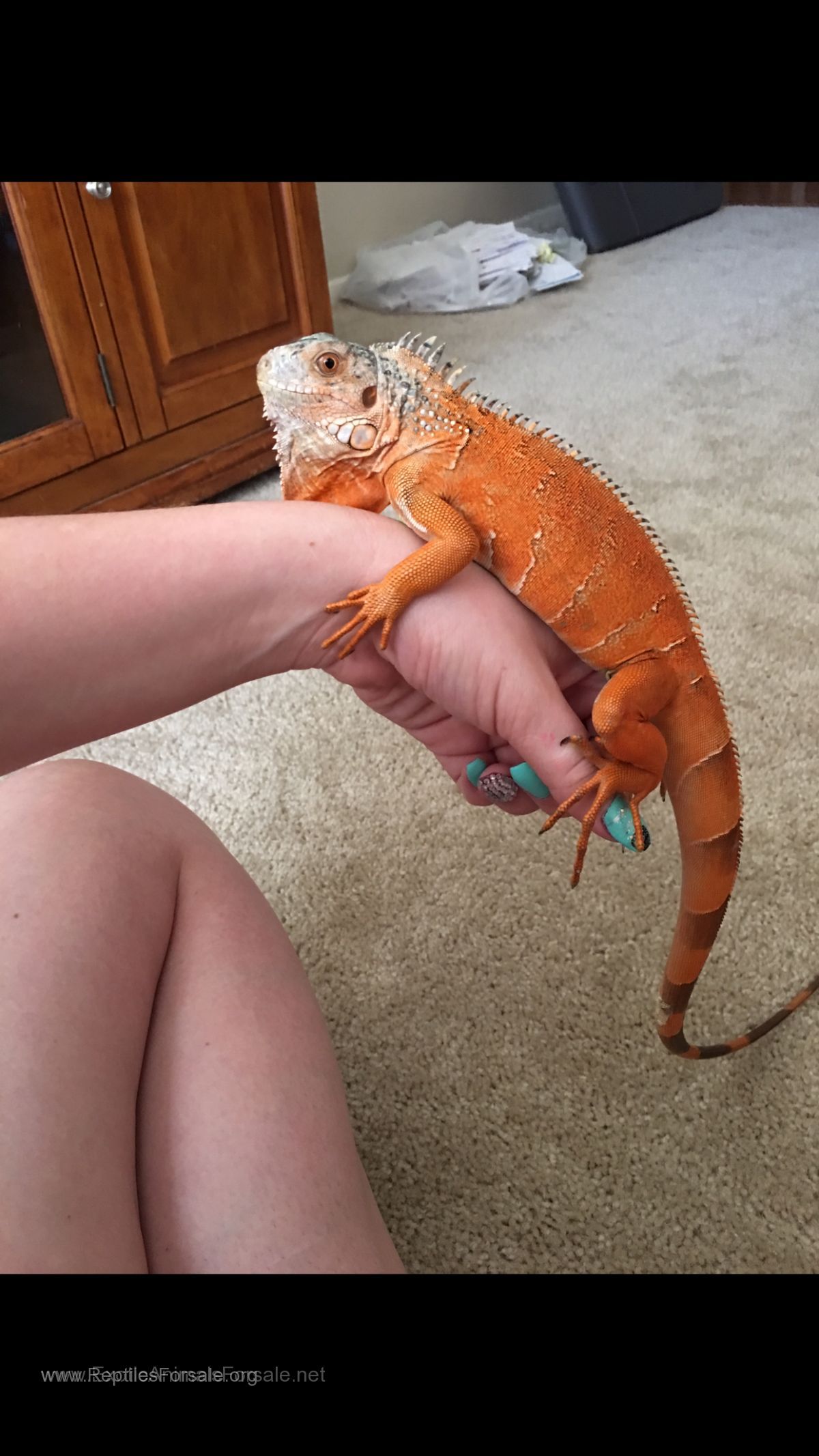 I HAVE LOTS MORE OF PICTURES AND VIDEOS BUT WILL HAVE TO CONTACT ME FOR THEM. THIS SITE ONLY ALLOWS ONE.
I need money for a therapy animal so I've decided to get out of the iguanas and my girl needs a good home.
****Keep in mind these animals live for about 20 years and reach the size of about 5-6 feet long. They need special heating lamps since they are reptiles, and will need a large enclosure. And they can not live together. They will eventually kill each other.
****Do your research before you decide to take on one of these! If you have any questions please feel free to shoot me a text or email. (I know sometimes info online can get a little confusing)
****Also realize this is not a first come first serve thing. I have become quite attached to her and I will hold on to her and pass up whoever I have to to be sure she gets put in a great home
*******INCLUDED:*******
-1 red iguana born July of 2015 I believe it's a female. Color is extremely different than most reds. Shes what some consider a "Fire Red" most red iguanas get more brown as they get older. She gets more orange/red colored.(if you don't know about the differences I'd be more then happy to show you with pics and stuff through email) Very uncommon in the United States. I have many breeders interested in her but I'd like to sell everything together. As she gets older she's worth more. (paid $200.00 for her)
-1 large cage. 48"x36"x18" on wheels, door on top and front, has drop pan, has basking shelf (list price is $519.99 plus 25.00 shipping)
-3 ceramic based lamps (the ones that won't overheat and melt), bulbs in each. day basking, UBV, night basking (each lamp was about $15.00 the bulbs were about $15.00)
-2 extra ceramic hear emitter bulbs for night time will last around 1 1/2 years each (paid a little more than $25.00 each)
-2 extra ceramic heat emitters for day time will last around 1 1/2 years each (paid a little more than $25.00 each)
-5 foot fake tree (paid $50.00 for)
-ordered an extra basking shelf (I think it was $45.00) I don't remember exactly.
-40lb sack of bedding for the bottom. (Something like 20-30.00)
-huge water/soaking bowl ($25.99)
-lizard leash ($12.00)
-hand held temperature gauge ($20.00)
-her spray bottle to mist her.
-whatever food she has left.
TOTAL EQUALS TO ABOUT $1118.00 not including all the other stuff I have for her. And about the 120.00 of tax on everything. let my loss be your gain.
I'll take 900.00 OBO for everything listed above. (Which is really just the price of cage, extra basking shelf for the cage, and iggy nothing else) OR would consider trading for a very cuddly parrot or a baby parrot to hand feed. (Parrot will be the therapy animal)
Please email me! Or if you have an iPhone and iMessage text. I don't have service where I am so I'll only review. iMessage on wifi. Thanks!
318-423-5075 (iMessage only)
sadieroberie@gmail.com
Name: Cindy
Email: Email7212@gmail.com
Location: Indianapolis
Indiana
 7 month old Iguana
Gender: Unknown
Price: $30
Healthy baby, but our older iguana can't get along with the baby, so we need to find baby a caring home.
Popularity & Availability in the 2026 Market
In 2026, the "Standard Green Iguana" is no longer the sole king of the pet trade. While they remain the most common species globally, a massive surge in popularity has shifted toward specialized morphs and rare "Rock Iguanas" of the genus Cyclura.
The "Florida Factor" and Out-of-State Sales
A major shift occurred in January 2026 with new Florida Fish and Wildlife (FWC) rulings. While Green Iguanas are now categorized as "Prohibited" for new personal possession in Florida, the state has activated new commercial programs allowing for the legal capture and sale of wild-caught specimens to out-of-state buyers. This has flooded the market with affordable, "field-collected" iguanas, though discerning keepers still prefer the health and temperament of Captive Bred (CB) specimens from dedicated breeders.
Available Species and Morphs
- The Classics: Green, Red, and Blue Axanthic Iguanas. These are the foundation of the hobby and are widely available.
- The Designer Morphs: Albino (Yellow), Crimson, and "Zero" (Snow) iguanas represent the high-end luxury market.
- The Rock Iguanas (Cyclura): Rhino Iguanas and Cuban Rock Iguanas are the current "status symbols" of the reptile world, valued for their dog-like personalities and impressive, bulky builds.
- The Spiny-Tails (Ctenosaura): Including Banana Pectinata and Black Spiny-tails, known for their incredible speed and armored appearance.
Housing: The "Room-Scale" Commitment
The single greatest cause of failure in iguana keeping is inadequate housing. Most iguanas for sale are hatchlings (10–12 inches), but they possess an explosive growth rate. In just two to three years, a tiny green lizard can become a five-foot power-house.
Indoor Enclosures
For an adult Green or Rhino Iguana, a 40-gallon tank is insufficient by month six. A permanent indoor home for a large adult should be at least 8 feet long, 4 feet wide, and 6 to 8 feet tall. In 2026, many keepers are converting spare bedrooms into "Iguana Rooms" or using modular PVC "walk-in" enclosures that allow for complete humidity control.
Outdoor Aviaries
If you live in a climate where temperatures stay above 65°F (18°C) year-round, outdoor housing is superior. Outdoor aviaries provide natural sunlight, which is incomparable for vitamin D3 synthesis. However, 2026 biosecurity standards require "dig barriers" (concrete floors or buried mesh) and double-entry doors to prevent accidental escapes into local ecosystems.
The 2026 "Bioactive" Trend: More keepers are utilizing bioactive substrate systems even for giant lizards. By using specific soil blends, isopods, and springtails, you can create a self-cleaning environment that manages waste and maintains the high humidity these tropical animals require.Environmental Specs: Temperature & Lighting
Iguanas are masters of thermoregulation. Without a precise thermal gradient, their digestive and immune systems will fail. In 2026, we utilize **Smart Thermostats** to manage these variables via mobile apps.
Thermal Gradients
| Requirement | Tropical (Green/Albino) | Rock/Desert (Rhino/Chuckwalla) |
|---|---|---|
| Basking Spot | 95°F – 100°F | 105°F – 120°F |
| Ambient (Warm) | 85°F – 88°F | 88°F – 92°F |
| Ambient (Cool) | 75°F – 80°F | 75°F – 82°F |
| Humidity | 70% – 85% | 30% – 50% |
The Lighting Revolution
As of 2026, the gold standard is the LED/UVB Hybrid fixture. Traditional mercury vapor bulbs are being phased out in favor of T5 HO (High Output) linear UVB bulbs paired with high-intensity LED grow lights to simulate the visual brightness of the midday sun. Without high-intensity UVB, an iguana will develop Metabolic Bone Disease (MBD), a painful and often fatal condition where the body leeches calcium from the bones to survive.
Nutrition: The 100% Herbivore Myth?
For decades, iguanas were fed "iguana pellets" and iceberg lettuce—a diet that led to thousands of early deaths. In 2026, we understand that variety is the key to longevity.
The Daily Salad
An iguana’s diet should consist of 80-90% dark leafy greens and 10-20% vegetables and fruit. Staple Greens: Collard greens, mustard greens, turnip greens, dandelion greens, and escarole. Vegetables: Shredded butternut squash, parsnips, snap peas, and bell peppers. Fruits (Treats only): Figs, papaya, and berries.
The Protein Debate
While Green Iguanas are strict herbivores, some species like the Spiny-tailed Iguanas (Ctenosaura) and young Rhino Iguanas are opportunistic omnivores. They may benefit from occasional high-quality insect protein (Dubia roaches) during their first year of life. However, once they reach adulthood, excess protein can lead to Visceral Gout and kidney failure.
Water & Hydration
Hydration is more than just a water bowl. Most iguanas drink by lapping water off leaves or during a soak.
- Soaking: Provide a basin large enough for the animal to submerge half its body. This aids in shedding and hydration.
- Misting: Automated misting systems are standard in 2026, ensuring the humidity doesn't drop during the night.
- The Salt Gland: If you see white crust on your iguana's nose, do not worry. This is a "salt sneeze." They use specialized glands to expel excess minerals, a sign of a well-functioning system.
Cost Analysis: The True Price of a "Living Dragon"
The "cheap" $20 green iguana is the most expensive pet you will ever own. Here is a realistic budget for a 2026 setup:
| Item | Estimated Cost (Low) | Estimated Cost (High/Luxury) |
|---|---|---|
| The Animal | $45 (Green) | $3,500 (High-End Morph/Cyclura) |
| Initial Setup (Juvenile) | $400 | $1,200 |
| Adult Walk-In Enclosure | $1,500 (DIY) | $6,000+ (Custom Build) |
| Monthly Food & Power | $80 | $250 |
| Annual Vet Visit | $150 | $500+ (With bloodwork) |
Safety & Reality Check: The "Danger" Factor
Is an Iguana Dangerous?
Iguanas are not domesticated pets like dogs or cats. They are wild animals with three primary weapons:
- The Tail: Used as a whip, an adult's tail can hit with enough force to draw blood, leave permanent scars, or even break small bones in a human hand.
- The Teeth: Iguanas have razor-sharp, serrated teeth designed for shearing through tough vegetation. A bite can require dozens of stitches.
- The Claws: Arboreal lizards have long, needle-sharp claws for climbing. Even a "tame" iguana can accidentally shred your arm while trying to climb you.
Breeding Season Aggression: Sexually mature males go through "rut" once a year. During this time, even the gentlest iguana can become highly aggressive and territorial. Owners must have the experience to manage this behavior safely.
Conclusion: Are You Ready for the Commitment?
Owning an iguana is a statement of dedication to one of the world's most impressive reptile lineages. It requires space, money, and a high level of biological understanding. If you can provide a walk-in enclosure, a daily organic salad bar, and the patience to earn the trust of a "Yellow" or "Green" dragon, you will be rewarded with a pet that can be as responsive and intelligent as any mammal.
Find Your Perfect Companion Today
- Albino Iguanas for Sale
- Blue Iguanas for Sale
- Chuckwallas for Sale
- Clubtail Iguanas for Sale
- Desert Iguanas for Sale
- Green Iguanas for Sale
- Red Iguanas for Sale
- Rhino Iguanas for Sale
- Spiny-tailed Iguanas for Sale
Reptiles wanted
Reptile equipment
for sale
Submit reptiles wanted
Submit equipment for sale
Submit reptiles stores Submit reptiles breeders
Reptile Breeders
Reptile List
Reptile Pictures
Fish for Sale
Softbills for Sale
Birds for Sale
Raptors for Sale
Livestock for Sale
Pigeons for Sale